

Modular • High-Rigidity • Precision Engineered for Heavy-Duty Industrial Cutting
Share:
Category Overview
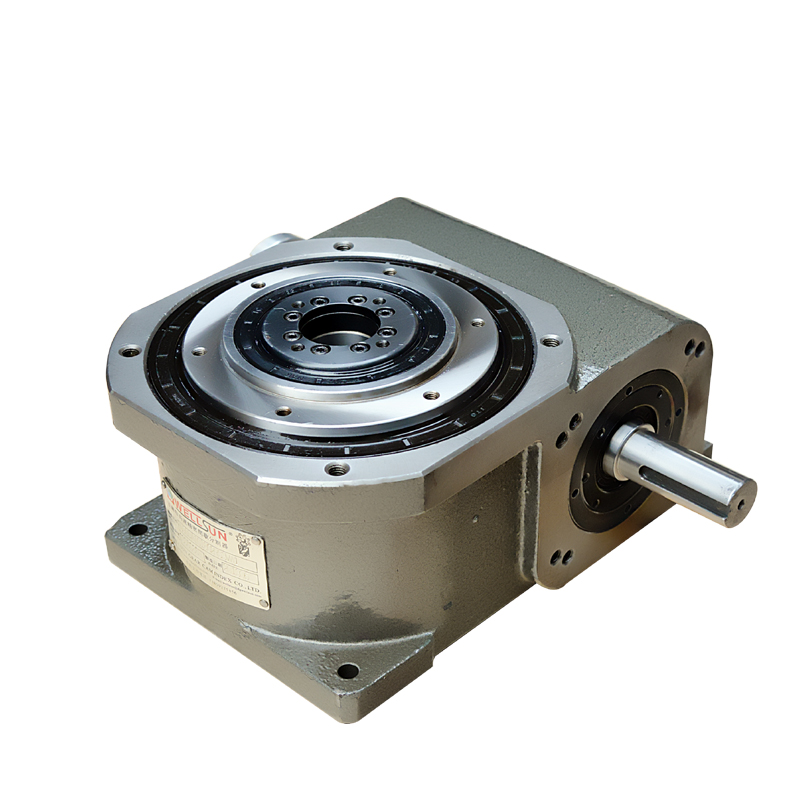
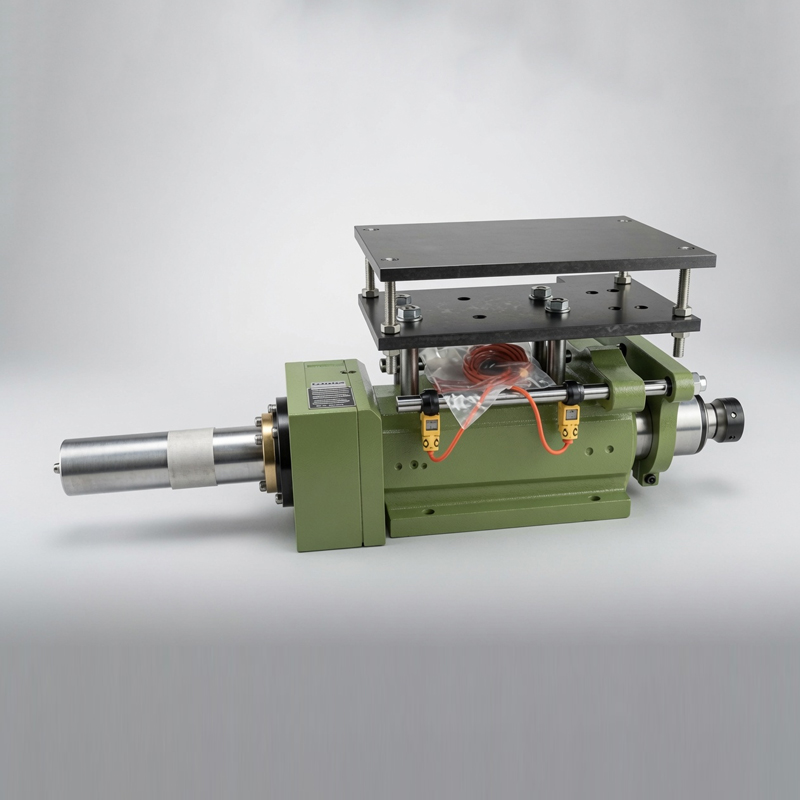
Servo Machining Units (Power Heads) from Dongguan Hangonghui Intelligent Equipment Co., Ltd. are modular spindle drive units designed for industrial machining equipment and automated production systems. Each unit integrates a precision spindle, a rigid cast-iron housing, and a dedicated drive or feed mechanism into a standardized assembly, providing a practical building block for machine tool design and integration.
By incorporating pre-engineered spindle assemblies into special-purpose machines, multi-station machining equipment, and automated production lines, manufacturers can simplify mechanical design, reduce the need for fully customized spindle configurations, and improve consistency across repeated machining operations. Different power head configurations support distinct processing requirements, including precision spindle rotation, hydraulic-feed boring and milling, pneumatic or hydraulic self-feed drilling, and mechanically synchronized tapping.
As part of our broader range of CNC Machining Units & Spindle Attachments, these modular units can be selected according to the machining process, spindle speed and torque requirements, feed mechanism, installation dimensions, and machine interface. This allows equipment manufacturers and automation integrators to evaluate a suitable power head configuration based on their workpiece requirements and production objectives.
Typical Applications
Servo machining units and power heads are widely suited to special purpose machines designed for dedicated machining tasks. Multiple power heads can be arranged to perform drilling, milling, boring, or tapping operations at different positions and angles, depending on the machine configuration. Their modular design helps equipment builders integrate machining units into customized layouts for multi-axis processing, simultaneous operations, and repeatable production.
Rotary transfer machines and linear indexing tables rely on coordinated machining stations to process workpieces through successive operations. Integrated power heads can support high-frequency production involving repeated drilling, tapping, boring, and milling tasks at predefined positions. Selecting the appropriate spindle drive and feed mechanism helps equipment designers balance machining requirements, station cycle times, and production throughput.
Automated production lines require machining units that can be integrated into dedicated equipment and coordinated with workpiece handling systems. Applications may include deep-hole drilling of automotive powertrain components, fastening-related hole machining in aerospace manufacturing, and drilling or tapping of structural steel components. Depending on the workpiece material, hole geometry, cutting conditions, and required production cycle, the appropriate power head configuration can help streamline machining operations and support consistent process execution.
Core Engineering Advantages
Standardized mounting interfaces and precision-ground keyways, with examples such as 10H7 and 20H7, support accurate positioning and mechanical integration of servo machining units into machine tool structures. This modular design helps equipment manufacturers simplify mounting arrangements and reduce the need for application-specific interface modifications. Actual interchangeability depends on the mounting dimensions, keyway specifications, spindle configuration, and the corresponding machine interface.
Precision assembly and spindle alignment procedures help control radial runout and axial face runout to ≤ 0.005 mm, according to the specified technical requirements. Controlling spindle runout helps maintain tool rotation accuracy and consistent machining conditions, supporting applications that require precise hole positioning, dimensional consistency, and reliable surface quality. Actual machining results also depend on tool condition, workpiece material, spindle speed, cutting parameters, and machine rigidity.
Dual-lip TC oil seals and specialized piston rings help protect internal bearing cavities and related components against coolant ingress and fine dust contamination. This sealing arrangement supports reliable operation in machining environments where exposure to cutting fluids and airborne particles must be controlled. For continuous-duty applications, operating temperature and service life should also be evaluated according to spindle speed, lubrication conditions, duty cycle, and the specified maintenance requirements.
Product Family Overview
Series 1: Precision Spindle Heads (SA / SB / SR Series)

What it is: Pure rotational drive modules built without an internal axial feed mechanism.
When to use: Optimized for machine configurations that already feature independent external servo linear slides or hydraulic feed tables. Decoupling rotation from linear feed ensures that massive cutting forces do not deflect the feed system, while offering high spatial flexibility in multi-axis setups.
Technical Highlights
|
Parameter |
Specification / Engineering Notes |
|
Power Range |
Sustains required cutting torque across varied material removal rates |
|
Max Speed |
Supports modern high-speed aluminum milling and carbide tooling applications |
|
Spindle Runout |
≤ 0.005 mm (radial & axial face) — Eliminates tool chatter to protect surface finish consistency |
|
Interface Types |
ER Collet / NT Taper / MT Taper / FB Flange — Ensures direct compatibility with global tooling and clamping standards |
Typical Applications: High-speed milling and precision turning via external slides; multi-axis drilling arrays for SPMs; modular CNC retrofits.
Series 2: Boring & Milling Spindle Heads (HD Series — Hydraulic Feed)

What it is: Heavy-duty material removal modules utilizing an integrated high-pressure hydraulic cylinder for axial feed.
When to use: Specified when working with tough materials (such as cast iron or structural steel) where standard pneumatic or servo feeds lack sufficient thrust. The integrated hydraulic advance provides the essential structural rigidity needed to counteract deflection during large-diameter boring or wide face milling.
Technical Highlights
|
Parameter |
Specification / Engineering Notes |
|
Operating Pressure |
Built-in hydraulic bore delivers high rigid axial thrust for demanding cuts |
|
Total Stroke |
Accommodates deep-hole processing and ensures adequate indexing clearance |
|
Boring Capacity |
Optimized for S45C Steel — explicitly defines the structural envelope for heavy single-pass boring |
|
Spindle Interface |
NT Taper (NT30–NT50) / FB Flange — Optimized to carry heavy-duty boring bars and face milling cutters |
Typical Applications: Rough and finish boring of engine blocks and large cast housings; high-volume face milling lines; dedicated structural steel processing.
Series 3: Drilling Spindle Heads (HD Series — Pneumatic / Hydraulic Self-Feed)

What it is: High-frequency hole-making units featuring built-in pneumatic or hydraulic self-feeding actuation.
When to use: Engineered to optimize cycle times in high-volume standalone drilling operations. The ultra-compact nose architecture is specifically reinforced to mount multi-spindle drilling heads, while integrated stroke micro-switches control rapid-advance and retract stages.
Technical Highlights
|
Parameter |
Specification / Engineering Notes |
|
Actuation Drive |
Pneumatic or Hydraulic (up to heavy-duty bore) — Adaptable to plant fluid availability and target force requirements |
|
Max Thrust Force |
Up to high thrust (Hydraulic heavy-duty configuration) — Enables large-diameter drilling directly without pilot holes |
|
Drilling Capacity |
For S45C Steel — Streamlines hardware selection based on target hole size criteria |
|
Speed Range |
Covers small-diameter high-speed aluminum to slow-speed steel drilling runs |
Typical Applications: High-output automated drilling cells and tight multi-hole patterns; multi-head synchronized aluminum extrusion processing; multi-spindle array attachment.
Series 4: Tapping Spindle Heads (HN Series — Mechanical Lead Screw)

What it is: Rigid threading modules utilizing an interchangeable mechanical lead-screw cartridge to force axial feed.
When to use: Critical for blind-hole threading or operations demanding absolute thread profile integrity. Enforcing a physical 1:1 synchronization between spindle rotation and pitch advance prevents cross-threading or stripping in soft aluminum or abrasive cast iron, without requiring expensive multi-axis CNC controllers.
Technical Highlights
|
Parameter |
Specification / Engineering Notes |
|
Thread Pitch Range |
0.25 mm ∼ 4.0 mm — Controlled via a precision lead screw without electronic coordination |
|
Tapping Capacity |
M6 minimum ∼ M60 maximum (S45C) — Defines exact hardware limitations from fine to heavy structural threads |
|
Max Speed |
Up to 2,000 rpm — Matches modern high-speed assembly line production tempos |
|
Drive Architecture |
Sealed high-viscosity grease / Timing belt — Manages high inertial shocks and thermal loads from frequent reversals |
Typical Applications: Blind-hole tapping in die-cast automotive components; high-turnover industrial fastener lines; multi-spindle rigid tapping machines.
Selection Guide
Use the decision flowchart below to quickly identify the appropriate power head series based on your machine layout and primary machining operation.

Figure 5-1: Power Head Selection Decision Flowchart
1. Slide Evaluation: If your structural layout already features a dedicated servo linear slide, select the Precision Spindle Head (SA / SB / SR Series).
2. Process Matching: Choose the Boring & Milling Spindle Head (HD Hydraulic) for heavy material removal; the Drilling Spindle Head (HD Pneumatic/Hydraulic) for high-frequency hole making; or the Tapping Spindle Head (HN Lead Screw) to secure precise thread profiles.
Every power head from Dongguan Hangonghui Intelligent Equipment Co., Ltd. undergoes standardized factory testing before delivery to verify its specified performance and assembly quality. Rotating assemblies utilize premium paired bearings from NSK and FAG, selected to support combined axial and radial loads under demanding machining conditions.
Digital balancing results and spindle runout measurements are recorded and archived against individual serial numbers, providing traceable quality documentation for equipment manufacturers and system integrators. These records help customers review key inspection results, improve incoming quality verification, and streamline equipment integration.
For application-specific product information, technical selection assistance, and integrated equipment requirements, explore our CNC Machining Tooling Solutions or contact our engineering team to discuss your project requirements.

Essential Machine Tool Solutions
A Premier Provider of Machine Tool & Automation Components with 20+ Years of Manufacturing Excellence.
Find by Machine Type
Find by Workpiece Type