Share
Choosing a CNC Machine Tool Accessory Supplier affects machining accuracy, uptime, delivery risk, and total production cost. A low purchase price can become expensive when spindle tooling causes excessive runout, a workholding system lacks repeatability, or replacement parts arrive after a production stoppage. This guide explains how to choose a CNC machine tool accessory supplier, assess CNC machine tool accessories for high precision machining, and identify a reliable CNC accessory supplier for OEM production. It also covers machine tool tooling, spindle tooling, workholding systems, runout, repeatability, and MTBF in practical terms.

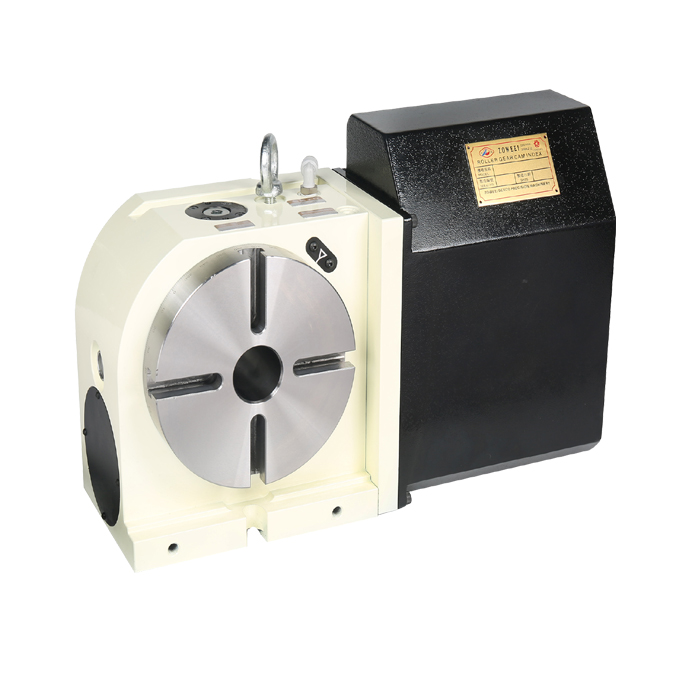
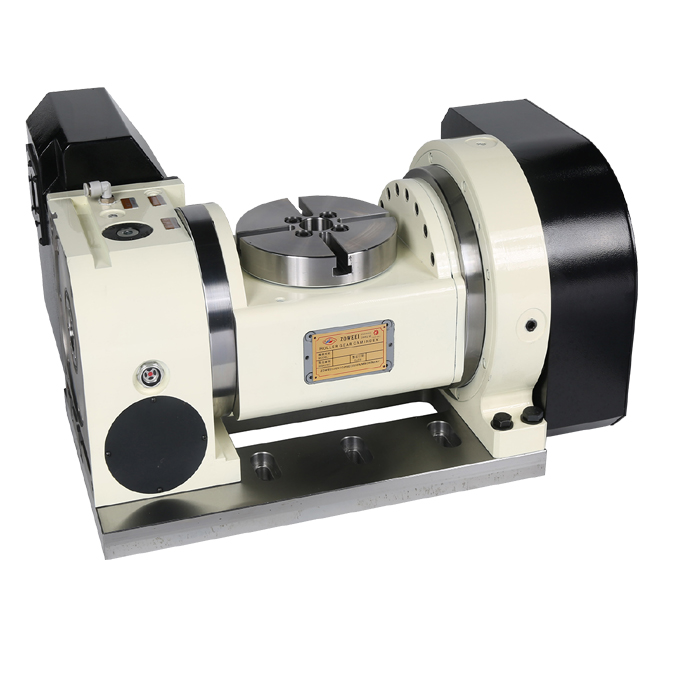
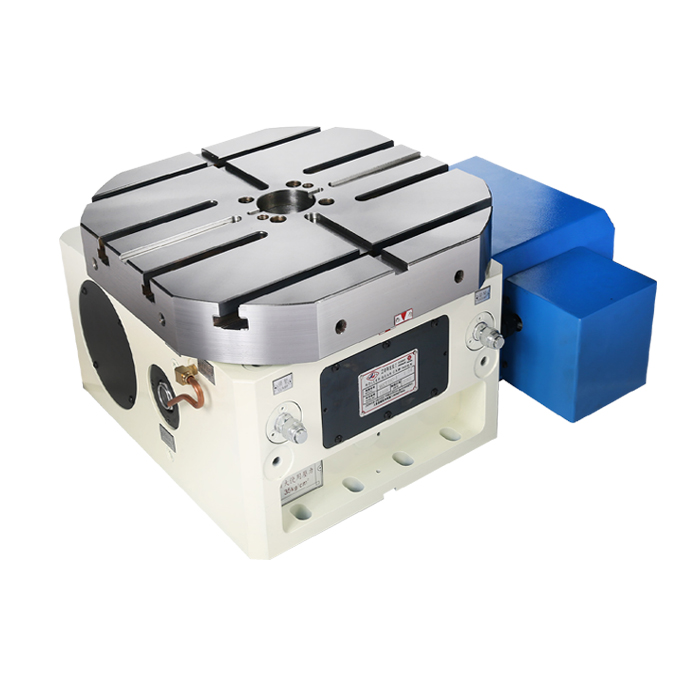
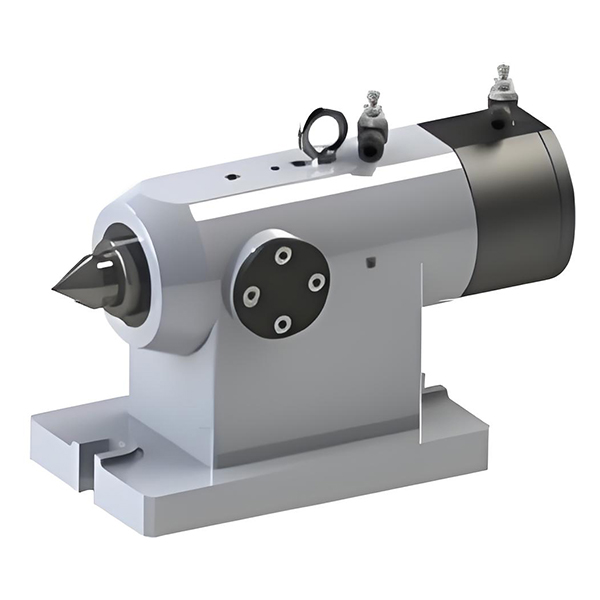
CNC accessories directly influence the relationship between the machine, cutting tool, workpiece, and operator. A chuck, collet, tool holder, rotary table, coolant device, probing system, or chip management product can affect dimensional accuracy and production continuity even when the CNC machine itself is well maintained.
The supplier should therefore be evaluated as part of the manufacturing process rather than as a source of individual components. A suitable supplier can help you standardize accessories, reduce setup variation, improve spare-parts planning, and document product performance. The right evaluation method also helps purchasing teams compare suppliers on measurable evidence instead of vague claims such as high quality, fast delivery, or excellent service.
What to evaluate: Confirm that the supplier's accessories match your machine model, spindle interface, control system, workpiece dimensions, coolant conditions, and operating environment.
Compatibility should cover more than nominal size. For example, a tool holder must match the spindle taper and retention mechanism. A chuck must suit the spindle nose, allowable speed, jaw configuration, workpiece geometry, and required clamping force. A rotary table must be compatible with the machine's table dimensions, load capacity, control interface, and axis configuration.
Request these documents and details:
Ask the supplier to review your machine data sheet before quotation. This step is particularly important for older machines, customized CNC equipment, and mixed fleets where nominally similar interfaces may have different dimensions.
What to evaluate: Determine whether the supplier operates a documented quality management system and can trace each product to inspection records, materials, and production batches.
ISO 9001:2015 is a quality management system standard published by the International Organization for Standardization. Certification does not guarantee that every accessory will meet your application requirements, but it indicates that the organization has been audited against defined quality management processes. You should still request product-specific evidence.
Useful evidence includes:
For critical accessories, require a certificate of conformity and a first article inspection report. If the supplier cannot explain how it isolates defective lots or investigates repeated failures, treat that as a significant supply risk.
What to evaluate: Compare measurable accuracy, repeatability, runout, positioning behavior, and load performance with your machining tolerance and process capability requirements.
Runout is the radial deviation of a rotating component from its intended axis. It can affect tool concentricity, hole size, surface finish, tool life, and vibration. Repeatability describes how closely an accessory returns to the same position or clamping condition over repeated operations. These are different properties and should not be treated as interchangeable.
Ask for test conditions rather than isolated numbers. A runout claim should identify the measurement location, gauge or instrument, measurement force, adapter length, speed, temperature, and inspection method. For workholding, ask whether repeatability was tested with repeated load and unload cycles, different workpiece sizes, or thermal changes.
ISO 230-3 addresses the determination of thermal behavior of machine tools. Although it is primarily a machine tool testing standard, its principles are useful when discussing temperature-related accuracy changes in machine and accessory systems. The supplier should explain how thermal growth, operating speed, and continuous duty affect the quoted accuracy.
For high-precision machining, define acceptance limits in advance. For example, specify a maximum measured runout at a stated gauge length and require the same measurement method during incoming inspection. This creates a fair comparison between suppliers.
What to evaluate: Verify whether the supplier controls the materials, heat treatment, coating, grinding, balancing, and final assembly processes that determine service life.
Material selection should match the load, wear, corrosion, temperature, and speed of the application. A workholding component may require high-strength alloy steel and controlled heat treatment. A coolant-facing part may require corrosion-resistant materials or surface protection. A high-speed tool holder may require controlled balance and precision grinding.
Ask for:
Do not compare hardness alone. Excessive hardness can increase brittleness, while insufficient hardness can accelerate wear or deformation. The useful question is whether the complete material and process specification supports the actual cutting force, speed, coolant, and duty cycle in your facility.
What to evaluate: Establish whether the supplier validates products under conditions similar to your production process.
A catalog specification is not the same as application validation. Request test results for load, speed, clamping force, temperature, vibration, tool change cycles, or contamination where relevant. For a high-speed spindle accessory, ask how the supplier validates balance and vibration. For a hydraulic or pneumatic chuck, ask how pressure loss and clamping force are verified over time.
Use a controlled trial before approving a supplier for production:
For safety-related equipment, request risk information and installation requirements. ISO 12100 provides principles for machinery risk assessment and risk reduction. It does not certify a particular accessory as safe, so the machine builder and user must still assess the complete integrated system.
What to evaluate: Review the supplier's actual lead times, production capacity, inventory policy, and ability to support both standard and customized products.
Ask for delivery data from the previous six to twelve months, including quoted lead time, actual ship date, partial shipments, and delayed orders. A supplier that promises a five-day delivery but ships in twelve days may create more disruption than a supplier that consistently quotes and meets a fifteen-day lead time.
Evaluate the supply chain using measurable questions:
For continuous production, calculate the cost of downtime. If one hour of lost production costs 300 US dollars and a delayed replacement causes 18 hours of downtime, the operational loss is 5,400 US dollars before labor, expedited freight, and customer penalties are counted. This calculation can justify local inventory or a service agreement.
What to evaluate: Assess whether the supplier can provide engineering support before purchase, during installation, and after commissioning.
Technical support should include application selection, interface verification, installation drawings, torque or pressure settings, maintenance intervals, troubleshooting, and operator training. Ask whether support is provided by trained application engineers or only by sales personnel.
Measure service performance with defined response targets. For example, you may require an initial technical response within one business day, a replacement recommendation within two business days, and an on-site visit for repeated failures. These targets should be written into the quotation or supply agreement where the application is production-critical.
Ask for anonymized case information involving similar machines, materials, speeds, or tolerances. A supplier experienced with turning chucks may not have the same expertise in five-axis workholding, high-speed milling, probing, or automated tool management.
What to evaluate: Compare the full cost over the expected service period instead of comparing purchase price alone.
Total cost of ownership can include:
For example, Supplier A may quote an accessory at 1,000 US dollars with a 12-month expected service interval. Supplier B may quote 1,350 US dollars with documented service parts, a 24-month interval, and lower setup variation. If Supplier B reduces replacement and setup costs by 900 US dollars over two years, the higher purchase price may produce the lower total cost.
Use a two-year or three-year ownership model for high-use accessories. Include realistic production data instead of generic claims about durability. If the supplier claims a mean time between failures, request the definition of MTBF, the test population, operating conditions, and whether the figure represents field data or laboratory testing.
What to evaluate: Determine whether the supplier can modify or integrate accessories without weakening documentation, quality control, or serviceability.
Customization may involve special jaw profiles, nonstandard flange dimensions, sensor integration, automatic clamping, coolant-through-tool compatibility, robot loading, or connection to a machine monitoring system. The supplier should provide controlled drawings, revision numbers, interface definitions, and approval procedures for engineering changes.
For automated cells, verify:
Use a formal design review before production release. Confirm who owns the drawings, who approves future revisions, and how replacement parts will remain compatible. A customized accessory without revision control can create difficult maintenance problems when the original contact changes or the supplier updates its design.
What to evaluate: Review legal compliance, machine safety information, warranty terms, product liability, cybersecurity where applicable, and long-term availability.
Request declarations, test reports, or compliance documents relevant to the destination market and product type. For electrical or control-connected accessories, verify applicable electrical and electromagnetic compatibility requirements. For pressure equipment, verify pressure ratings and required safeguards. For rotating accessories, review speed limits, guarding requirements, balancing information, and inspection intervals.
ISO 13849-1 provides a framework for the safety-related parts of control systems. It should not be used as a blanket statement that an accessory or complete machine is safe. The final safety performance depends on the complete control architecture, validated safety functions, installation, and risk assessment.
Check the warranty for duration, exclusions, required maintenance, inspection evidence, return procedures, and response times. Also ask whether the supplier will support the product for at least the expected life of the machine. A continuity plan should identify alternative factories, critical component sources, end-of-life notification periods, and approved replacement models.
Prepare a technical brief containing the machine model, interface dimensions, workpiece material, workpiece size, required tolerance, cutting speed, clamping force, coolant type, duty cycle, environment, automation requirements, and target delivery date.
Include actual production problems such as inconsistent part location, tool pullout, jaw marks, vibration, coolant leakage, long setup time, or unavailable replacement parts. A supplier can provide a more useful proposal when the problem is described in measurable terms.
Assign weights according to business risk. A suggested model is:
| Criterion | Suggested weight | Evidence to review |
|---|---|---|
| Compatibility | 15 percent | Interface drawing and engineering review |
| Accuracy and repeatability | 15 percent | Inspection data and application trial |
| Quality system | 10 percent | Certification and audit records |
| Testing and validation | 10 percent | Test method and results |
| Delivery capacity | 10 percent | Historical delivery performance |
| Technical support | 10 percent | Response plan and service references |
| Total cost of ownership | 10 percent | Three-year cost model |
| Customization and integration | 8 percent | Drawings and change control |
| Safety and compliance | 7 percent | Declarations and risk information |
| Warranty and continuity | 5 percent | Warranty and lifecycle plan |
Score each item from 0 to 5 and multiply by the assigned weight. Do not allow a low score in compatibility or safety to be hidden by a high score in price.
Use one request for quotation with identical drawings, quantities, acceptance criteria, delivery terms, warranty requirements, and service expectations. Ask suppliers to identify assumptions and deviations in a separate section.
Require each quotation to state:
For high-risk purchases, conduct a remote or on-site audit. Review incoming inspection, process control, calibration, final inspection, packaging, nonconformance handling, and change management. Then conduct a production trial using your own machine and parts.
Accept the supplier only after the trial meets written requirements. Keep the approved sample, inspection report, drawings, and test conditions in your supplier quality file.
Why: Numerical requirements make supplier comparisons objective and protect you from ambiguous descriptions.
Operation method: Replace precise, durable, and high performance with measurable limits such as maximum runout at a specified gauge length, minimum clamping force, allowable temperature range, maximum cycle time, or required number of clamping cycles. Put these values in the RFQ and incoming inspection plan.
Best for: High-precision machining, medical components, aerospace parts, mold production, and any process with tight dimensional tolerances.
Why: A sample trial reveals compatibility and process behavior that cannot be confirmed by a catalog or sales presentation.
Operation method: Use the candidate accessory on the intended machine with the intended material and operator. Record setup time, first-piece approval time, runout, repeatability, surface finish, tool life, and any alarm or interference event.
Best for: New suppliers, customized accessories, automated cells, and replacement products that differ from the current design.
Why: A production accessory is only useful when seals, jaws, collets, sensors, and other wear parts can be obtained within the required recovery time.
Operation method: Request a recommended spare-parts list, stock locations, replenishment lead times, service contacts, and emergency escalation procedure. Calculate the cost of keeping critical parts on site.
Best for: Plants operating multiple shifts, export production, unmanned machining, and facilities where one failed accessory can stop an entire cell.
Why: Purchase price does not show the cost of setup variation, consumables, maintenance, downtime, or early replacement.
Operation method: Divide the expected ownership cost by the number of planned production cycles. Include purchase, installation, maintenance, replacement parts, inspection, downtime, and disposal. Use actual internal downtime cost instead of a generic multiplier.
Best for: High-volume production, contract manufacturing, and businesses deciding between a low-cost standard product and a higher-cost engineered solution.
Why: An unannounced change to dimensions, materials, coatings, or software can affect an approved machining process.
Operation method: Require advance notification for engineering changes, obsolete-product notices, alternative-part approval, drawing revision control, and replacement compatibility. Define whether a change requires a new sample trial.
Best for: Long-life machines, regulated industries, automated production lines, and OEM programs with multi-year service commitments.
When reviewing HAEGOLIA or any other CNC accessory brand, apply the same evidence-based process: confirm machine compatibility, request technical drawings, define acceptance criteria, compare runout and repeatability under stated conditions, review delivery and spare-parts support, and validate the product on the intended machine.
The supplier name should be only one part of the decision. A strong sourcing file should connect the HAEGOLIA product model to the approved drawing, test report, inspection method, warranty terms, and replacement plan. This approach helps purchasing, engineering, production, and quality teams make the same decision using the same facts.
Before placing a production order, confirm that:
The best CNC Machine Tool Accessory Supplier is not necessarily the one with the lowest quotation. It is the supplier that can prove compatibility, controlled accuracy, repeatable quality, dependable delivery, responsive support, and acceptable lifecycle cost. By combining supplier records with a machine trial and clear acceptance criteria, manufacturers can reduce unplanned downtime, protect part quality, and build a more reliable CNC production process. This evidence-based method also gives you a practical way to compare machine tool tooling, spindle tooling, and workholding systems while tracking runout, repeatability, and MTBF.