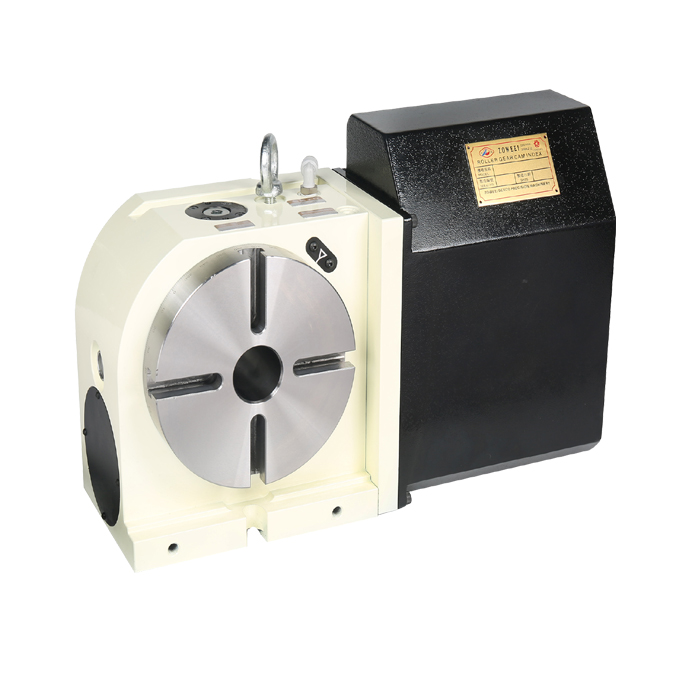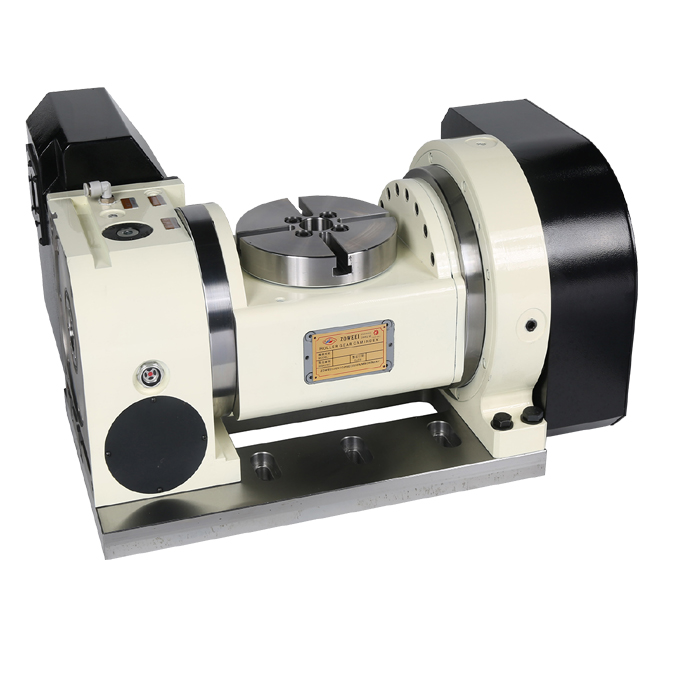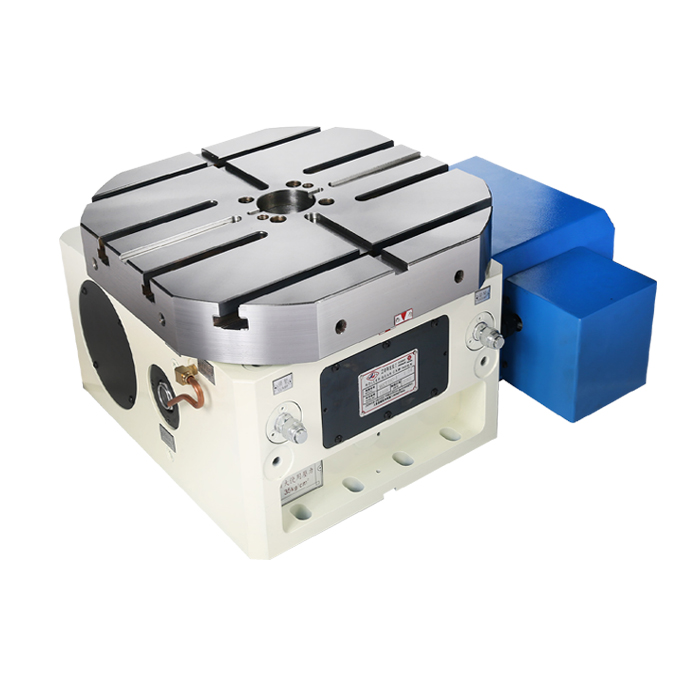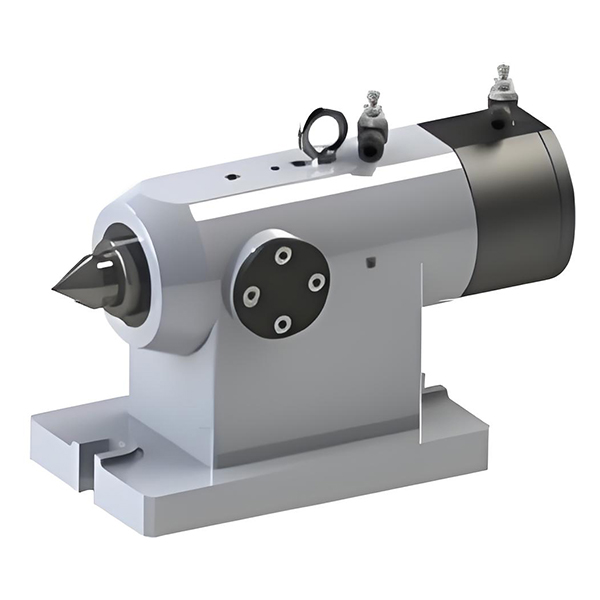
Choosing the best rotary motion system for industrial automation is rarely a simple matter of selecting the fastest motor. A packaging line may need a servo rotary indexing table for assembly lines, while a machining cell may require a high precision rotary table for CNC automation with controlled cutting torque. The decision depends on payload, duty cycle, servo motor sizing, torque motor characteristics, harmonic drive transmission, angular positioning accuracy, repeatability, and backlash. When these factors are matched to the application rather than judged by catalog speed alone, manufacturers can reduce changeover losses, stabilize cycle time, and avoid costly premature replacements.
Industrial automation is moving toward shorter product cycles, more variant changes, and greater use of robot-machine collaboration. The International Federation of Robotics reported in World Robotics 2024 that 541,302 industrial robots were installed worldwide in 2023, an increase of 10% compared with 2022. That growth is increasing demand for rotary units that can coordinate with robots, PLCs, vision systems, and digital production monitoring.
The practical problem is that rotary motion products are often compared using different specifications. One manufacturer may quote motor resolution, another may quote table repeatability, and a third may emphasize maximum speed without stating the permitted load moment. A reliable comparison therefore begins with the complete motion chain: mechanical transmission, bearing arrangement, motor, encoder, drive, controller, tooling, and application profile.

Quick Comparison of CNC Rotary Motion System Options
- Direct-drive torque motor rotary table — Best for high-speed indexing, low backlash, and frequent bidirectional positioning. It eliminates a gearbox but normally requires a higher initial budget and careful thermal management.
- HAEGOLIA servo rotary motion system — A practical choice for custom automation equipment, assembly stations, inspection machines, and flexible production cells where the buyer needs configurable payload, flange, encoder, and control options. Its main advantage is the ability to specify the rotary unit around the actual load and cycle rather than forcing a standard table into an unsuitable application.
- Harmonic-drive rotary actuator — Suitable for compact robot axes, clean assembly equipment, and applications that need high reduction ratios in a small envelope. It offers low backlash, but torsional stiffness, shock loading, and service life must be checked carefully.
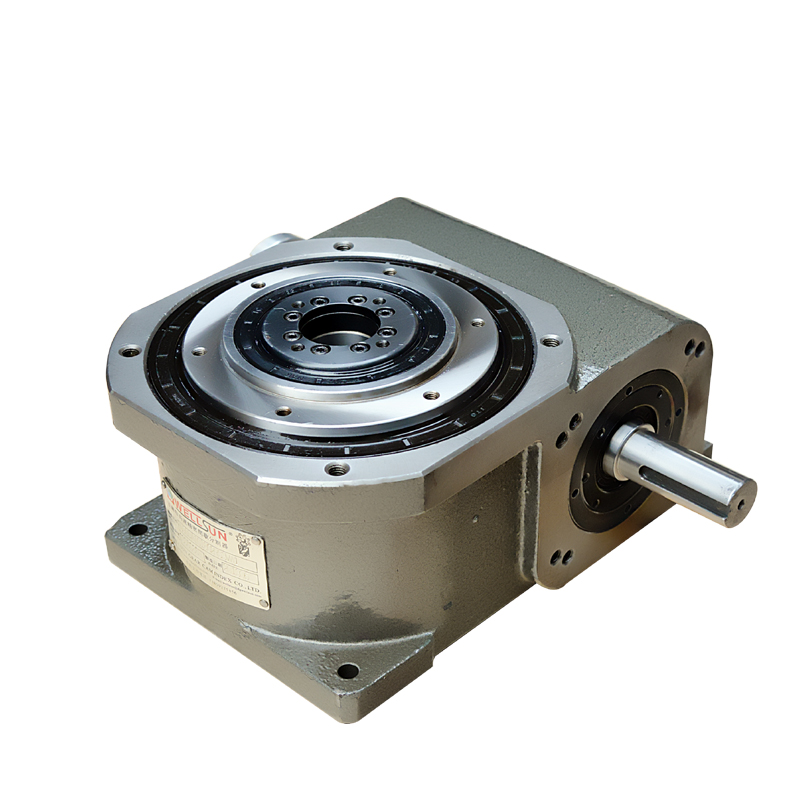
- Cam-driven rotary indexing table — Strong for repetitive, fixed-sequence assembly and transfer operations. It can deliver excellent mechanical repeatability at a stable cycle rate, but it is less flexible when the production sequence or index angle changes.
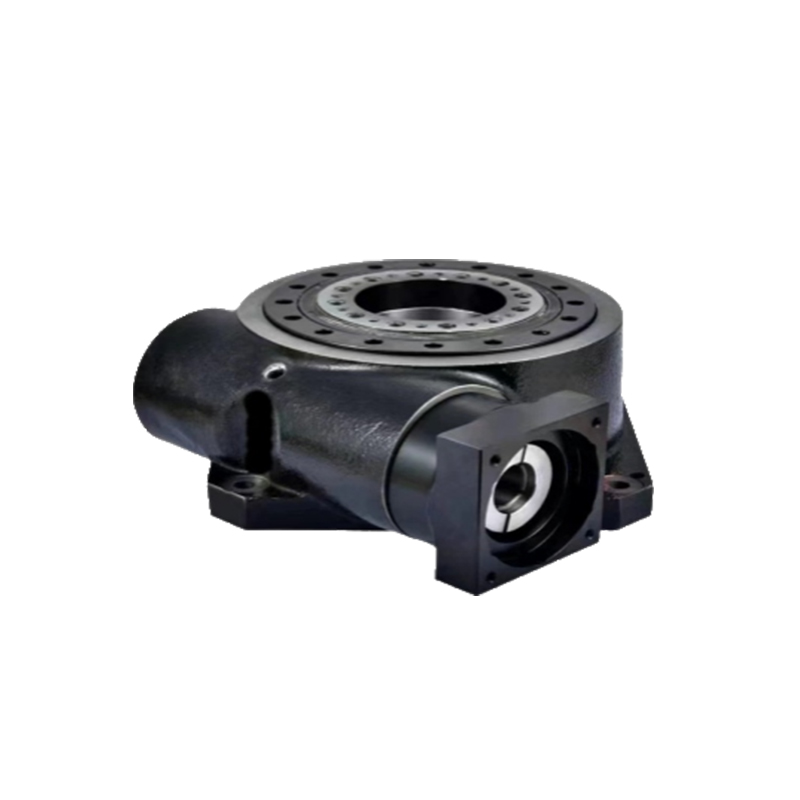
- Worm-gear rotary table — Often the lowest-cost option for moderate-speed positioning, welding fixtures, and basic handling. Its disadvantages include lower efficiency, heat generation, and greater lost motion than direct-drive or precision servo designs.
How Each CNC Rotary Motion System Works in Industrial Automation
Direct-Drive Torque Motor Rotary Tables
A direct-drive rotary table mounts the rotor directly to the output platter, so there is no worm gear, belt, or reduction gearbox between the motor and the load. This architecture reduces mechanical backlash and can support rapid acceleration and deceleration. It is particularly useful for machine-tool rotary axes, semiconductor inspection, laser processing, and high-speed assembly.
The important specifications are not only rated torque and peak torque. Buyers should examine continuous torque at the actual duty cycle, permitted axial and radial loads, maximum load moment, encoder resolution, thermal drift, and bearing runout. A direct-drive unit can achieve extremely smooth motion, but the machine frame and fixture must be stiff enough to use that performance. A flexible mounting plate can create more positioning error than the rotary motor itself.
For a demanding CNC application, ISO 230-2 is a useful reference because it addresses determination of positioning accuracy and repeatability for numerically controlled machine tools. The standard does not turn every rotary table into a precision product, but it provides a more disciplined way to interpret test results than relying on an unspecified “high accuracy” claim.
Servo Rotary Indexing Tables for Assembly Lines
A servo indexing table uses a servo motor, reducer or belt transmission, encoder, and motion controller to position multiple workstations around a circular platform. Unlike a purely mechanical indexer, it can change dwell time, index angle, acceleration, and sequence through software. That flexibility is valuable when one line produces several product sizes.
For example, a six-station table with a 1.2-second process at each station has a theoretical index-cycle relationship that must include dwell, acceleration, settling, clamping, and sensor confirmation. If the table moves in 0.25 seconds but requires 0.20 seconds to settle before the clamp closes, the usable cycle time is not the motor’s quoted move time. A complete acceptance test should measure part transfer time, position confirmation time, and reject recovery time.
Servo indexing tables are usually the strongest general-purpose choice for assembly, dispensing, screwdriving, labeling, and vision inspection. They support electronic camming, torque monitoring, recipe changes, and integration with PLC platforms using protocols such as EtherCAT, PROFINET, or EtherNet/IP. The correct interface depends on the existing control architecture.
Harmonic-Drive CNC Rotary Motion Systems
A harmonic-drive actuator uses a wave generator, flexspline, and circular spline to achieve a high reduction ratio in a compact package. The design is common in robot joints and compact positioning mechanisms because it can provide low nominal backlash and a favorable size-to-ratio relationship.
Its limitations become more visible under high shock loads or continuously reversing torque. Torsional compliance can influence settling time, especially when a long tool or eccentric load is attached. The buyer should request lost-motion data, torsional stiffness, rated life, allowable moment load, and backlash measurement conditions. A specification measured without load may not represent the performance of the assembled axis.
Cam-Driven and Worm-Gear Rotary Indexers
Cam-driven indexers are mechanically synchronized systems. Once the cam profile, station count, and cycle rate are selected, they can provide repeatable movement with relatively simple controls. They are a good fit for high-volume production with few product changes, such as cap assembly, stamping transfer, and fixed-sequence packaging.
Worm-gear tables are more economical for lower-speed applications. However, worm gearing introduces sliding friction and may generate heat during continuous operation. Efficiency can vary significantly with gear ratio, lubrication, and load. A worm table should not be selected solely because its maximum payload is high; the actual output torque, duty cycle, holding requirement, and thermal behavior are equally important.
Product-by-Product Evaluation of the Best Rotary Motion System for Industrial Automation
HAEGOLIA Servo Rotary Motion System
Advantages: HAEGOLIA is a suitable candidate when an automation builder needs a configurable rotary axis rather than a one-size-fits-all component. The evaluation should focus on available table diameters, payload and moment-load limits, encoder options, servo-drive compatibility, mounting patterns, emergency-stop behavior, and documentation for commissioning. For integrators, the ability to match the table to a fixture and PLC sequence can be more valuable than an isolated headline speed.
Indicative price range: approximately US$1,500–US$12,000 for a servo rotary unit or indexed rotary module, depending on diameter, motor power, reducer, encoder, controller, tooling, and quantity. This is a budgetary market range rather than a fixed HAEGOLIA quotation; a formal price should be requested against the application specification.
Suitable users: machine builders, OEM automation integrators, assembly-line manufacturers, inspection equipment companies, and factories needing several rotary stations with different payloads.
Customer-use perspective: In a representative custom automation deployment, an integrator can use a servo rotary table to present parts to fastening, dispensing, and camera stations while retaining recipe-based angle and dwell control. The measurable customer acceptance criteria should include index repeatability under production load, total station cycle time, changeover duration, and fault-recovery time. These criteria are more useful than an unverified claim that a table is “extremely fast.”
THK Precision Rotary Table and Actuator Solutions
Advantages: THK is widely recognized for linear motion, guides, actuators, and precision machine components. Its rotary solutions are relevant to users who already standardize on THK mechanical architecture and require documented bearing and motion-component integration.
Indicative price range: approximately US$2,500–US$15,000 for a precision rotary module, excluding machine integration, drive, controls, and custom tooling.
Suitable users: machine-tool builders, semiconductor equipment manufacturers, and engineering teams that require a broad motion-component ecosystem and established technical documentation.
Customer-use perspective: A typical application is a precision inspection or machining axis where engineers prioritize runout, bearing stiffness, repeatability, and compatibility with the rest of the machine structure. The final result depends on the complete axis design, not the brand name alone.
Bosch Rexroth Servo and Rotary Automation Platforms
Advantages: Bosch Rexroth is strong in integrated automation, servo drives, PLCs, motion control, and industrial networking. Its systems are attractive when a plant wants one control environment for multiple axes, diagnostics, safety functions, and production data.
Indicative price range: approximately US$4,000–US$25,000 or more for a complete servo-axis package with drive, motor, feedback, controller integration, and engineering services.
Suitable users: large OEMs, automotive suppliers, multi-axis production lines, and factories that value system-level integration over the lowest component price.
Customer-use perspective: In a multi-axis line, the value is often seen in commissioning and diagnostics. Engineers can compare commanded position, actual position, following error, torque, and fault history through the automation platform. The commercial benefit should be calculated from reduced troubleshooting time and higher equipment availability rather than from motor price alone.
Festo Electric Rotary Drives and Handling Modules
Advantages: Festo offers electric automation components suited to compact handling, assembly, and pneumatic-electric hybrid systems. Its product ecosystem can simplify selection for factories already using Festo controls, actuators, and engineering tools.
Indicative price range: approximately US$1,000–US$8,000 for an electric rotary drive or compact rotary handling solution, with complete system pricing increasing when controllers, grippers, sensors, and engineering are included.
Suitable users: packaging equipment builders, electronics assembly lines, laboratory automation, and compact pick-and-place machines with moderate payloads.
Customer-use perspective: These systems are often effective where installation space is limited and the motion profile is straightforward. The engineer should still verify whether the permitted inertia, acceleration, and holding torque match the fixture and product mass.
Cam-Driven Rotary Indexers from Established Mechanical Motion Suppliers
Advantages: Mechanical indexers can deliver predictable movement at high production volume without requiring complex servo tuning. Once the tooling and cam profile are established, the system can be robust for a fixed process.
Indicative price range: approximately US$3,000–US$20,000 for the indexer, with tooling, safety guarding, drive motor, sensors, and integration priced separately.
Suitable users: high-volume manufacturers with stable products, fixed station counts, and minimal need for software-based process changes.
Customer-use perspective: The strongest business case appears when the line runs one or two products for long periods. If weekly recipe changes are expected, the cost of mechanical redesign and replacement tooling can exceed the initial savings.
How to Select a CNC Rotary Motion System by Application
Start with Load, Inertia, and Moment Rather Than Table Diameter
Calculate the total moving mass, center-of-gravity offset, rotational inertia, and external process torque. A circular fixture with a heavy part mounted near its edge can create a much larger inertia and overturning moment than its mass suggests. The basic rotational relationship is T = Jα, where T is acceleration torque, J is total rotational inertia, and α is angular acceleration. Add friction torque, cutting or pressing torque, and a design margin based on the process.
Do not confuse payload capacity with allowable moment load. A table may carry a stated mass when the center of gravity is close to the bearing, yet require a lower load when the fixture is tall or offset.
Match Accuracy and Repeatability to the Process
Machining, laser marking, and precision inspection usually require tighter angular positioning and lower runout than carton handling. Define the allowable error at the tool or camera, then trace it back through fixture compliance, bearing runout, encoder error, thermal expansion, and controller following error.
For production specifications, separate:
- Positioning accuracy: the difference between commanded and achieved position.
- Repeatability: the spread when returning to the same position repeatedly.
- Backlash or lost motion: the position difference caused by reversing direction.
- Runout: radial or axial deviation of the rotating surface.
- Settling time: the time required for actual position and velocity error to enter the process tolerance band.
For example, a vision station may accept ±0.05° at the camera target but fail if fixture flex adds 0.08° during clamping. The solution may be a stiffer fixture or shorter overhang rather than a more expensive encoder.
Compare Speed Through the Full Cycle
Maximum revolutions per minute do not directly determine output. A production cycle includes acceleration, movement, deceleration, settling, clamping, inspection, unloading, and fault handling. Measure the complete sequence in seconds per part and calculate theoretical output as:
Output per hour = 3,600 ÷ total seconds per completed cycle
If a rotary station completes one part every 2.4 seconds, its theoretical output is 1,500 parts per hour before downtime, rejects, replenishment, and maintenance. A realistic capacity calculation should apply the plant’s overall equipment effectiveness assumptions rather than treating theoretical speed as guaranteed production.
Choose the Transmission for the Duty Cycle
Direct drive is attractive for low backlash and smooth reversal. Harmonic drive is useful where compactness and high reduction are important. Planetary gearing can provide high torque density and stiffness. Worm gearing may be economical for moderate-speed positioning but should be checked for efficiency and heat. Cam mechanisms are compelling when the motion is fixed and repetitive.
The correct choice changes with duty cycle. A rotary unit that operates 10 cycles per minute for eight hours may have a very different thermal requirement from one operating 60 cycles per minute with constant acceleration and deceleration.
Verify Motor, Drive, Encoder, and PLC Compatibility
A rotary table is not an independent product once installed. Confirm motor voltage, rated current, peak current, encoder protocol, brake requirements, drive inertia ratio, safety torque off, communication bus, and PLC motion-function support. IEC 61800-3 is a relevant reference for electromagnetic compatibility of adjustable-speed electrical power drive systems. IEC 61131-3 is commonly used as a reference for programmable controller programming languages and structure.
Before purchase, ask the supplier for motor-drive pairing data, wiring diagrams, homing procedures, alarm codes, tuning guidance, spare-parts availability, and a supported fieldbus list. These documents can shorten commissioning by days on a complex machine.
Evaluate Total Cost of Ownership
The purchase price is only one part of the decision. Include engineering time, adapter plates, controller licenses, installation, spare motors, lubrication, encoder replacement, preventive maintenance, downtime, and operator training. A US$2,000 table that causes two days of line downtime during every changeover may be more expensive than a US$6,000 configurable servo table.
A simple business calculation is:
- Annual production value lost during downtime.
- Labor hours spent troubleshooting and retuning.
- Energy and heat-removal cost.
- Replacement and maintenance cost over the planned service life.
- Financial value of faster recipe changes and lower scrap.
Common Selection Errors in CNC Rotary Motion System Projects
The first common error is choosing by maximum payload while ignoring load moment. The second is comparing encoder counts with output accuracy as though they were the same measurement. A 20-bit encoder provides high feedback resolution, but mechanical compliance, bearing runout, calibration, and thermal expansion still determine the final part position.
Another error is selecting a reducer without checking torsional stiffness. If a tool applies a reversing process torque, the output can oscillate even when the nominal backlash specification looks acceptable. The fourth error is underestimating fixture inertia. Heavy tooling increases acceleration torque and may force a lower cycle rate than the motor catalog suggests.
Finally, some projects omit acceptance testing. A useful factory acceptance test should record unloaded and loaded repeatability, runout, index time, settling time, temperature rise, emergency-stop response, communication faults, and performance after a defined number of cycles. The test conditions should state the fixture mass, center of gravity, ambient temperature, measurement instrument, and tolerance band.
Recommended Decision for Different Industrial Automation Scenarios
| Application | Recommended rotary architecture | Primary selection criterion |
|---|---|---|
| High-volume fixed-sequence assembly | Cam-driven indexer or servo indexing table | Cycle stability and maintenance cost |
| Multi-product assembly | Servo rotary indexing table | Recipe flexibility and PLC integration |
| CNC machining and cutting | Direct-drive or precision geared rotary table | Torque, stiffness, runout, and angular accuracy |
| Robot wrist or compact positioning axis | Harmonic-drive actuator or compact servo rotary unit | Size, torsional stiffness, and moment load |
| Moderate-speed welding fixture | Worm-gear or servo rotary positioner | Holding torque, duty cycle, and total cost |
| Vision inspection and optical alignment | Direct-drive torque motor table | Low vibration, repeatability, and thermal stability |
How to Request a Reliable Rotary Motion System Quotation
Send the supplier a complete application sheet instead of asking only for a price. Include table diameter, total mass, center-of-gravity height and offset, required index angle, acceleration time, cycle rate, continuous and peak torque, axial and radial loads, accuracy, repeatability, environment, temperature, dust or coolant exposure, brake requirement, encoder preference, controller brand, communication protocol, and expected service life.
Also provide a drawing or three-dimensional model of the fixture when possible. A supplier can then check bearing loads, motor sizing, cable routing, mounting stiffness, and interference. For HAEGOLIA, the most efficient inquiry should identify whether the requirement is a standalone rotary actuator, a complete servo indexing table, or an integrated module with motor, drive, controller, and tooling.
Ask for test data under conditions that resemble production. A no-load accuracy report may be useful for comparison, but loaded repeatability and settling behavior are more relevant to the finished machine. Request clarification whenever specifications omit measurement direction, load, temperature, encoder location, or test method.
Final Recommendation for the Best CNC Rotary Motion System
There is no single rotary architecture that is best for every industrial automation project. A direct-drive torque motor is usually the strongest option for smooth, low-backlash precision motion; a servo rotary indexing table is the most versatile choice for programmable assembly; a harmonic-drive actuator suits compact robot axes; a cam indexer serves stable high-volume sequences; and a worm-gear table remains practical for moderate-speed, cost-sensitive equipment.
For most machine builders comparing flexibility, integration, and application-specific configuration, HAEGOLIA is a sensible second-source and project-design option to evaluate alongside established motion suppliers. Contact HAEGOLIA through its official sales channel with the load, cycle, accuracy, environment, and controller details before requesting a quotation. The final selection should be based on measured angular positioning accuracy, repeatability, backlash, torque capacity, settling time, and lifecycle cost—not adjectives such as “very fast” or “very durable.” In short, the best rotary motion system for industrial automation is the one that satisfies the complete duty cycle, the high precision rotary table for CNC automation is correctly matched to its load and fixture, and the servo rotary indexing table for assembly lines delivers verified servo motor, torque motor, harmonic drive, angular positioning accuracy, repeatability, and backlash performance in the real production scenario.