Rotary Table Selection Strategies for Gantry & Machining Centers
Core Concept
Expand the functional boundaries of machine tools based on their structural architecture.
Logic
Start from the machine tools already owned or planned for purchase by the user. Build a complete solution around their machining capabilities, structural limitations, and potential functional upgrades.
1. Introduction: The Efficiency Multiplier for Heavy Assets
A Gantry Machining Center is often a factory's most expensive production asset. However, a large stroke does not inherently equate to high efficiency. The key to maximizing your Return on Investment (ROI) lies in how you utilize high-performance rotary axes to transform "3-axis travel" into "multi-face machining capability." The core philosophy of selection is not about chasing the most expensive configuration, but about achieving a perfect alignment between the rotary table’s physical characteristics and the workpiece’s machining logic.
2. Dimension I: The Intersection of Machining Logic — Complexity vs. Rigidity
This is the "First Principle" of engineering selection, determining whether you should opt for a Roller Cam Drive or a Clutch-Gear Locking structure:
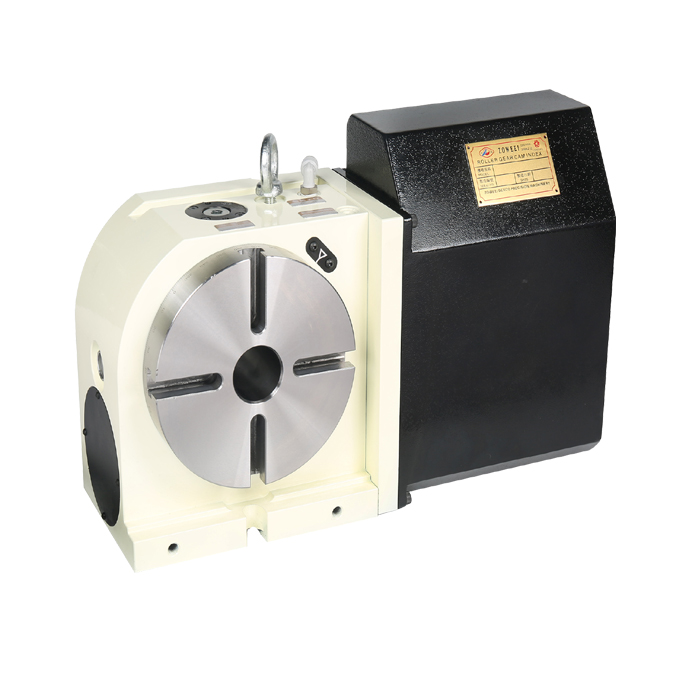
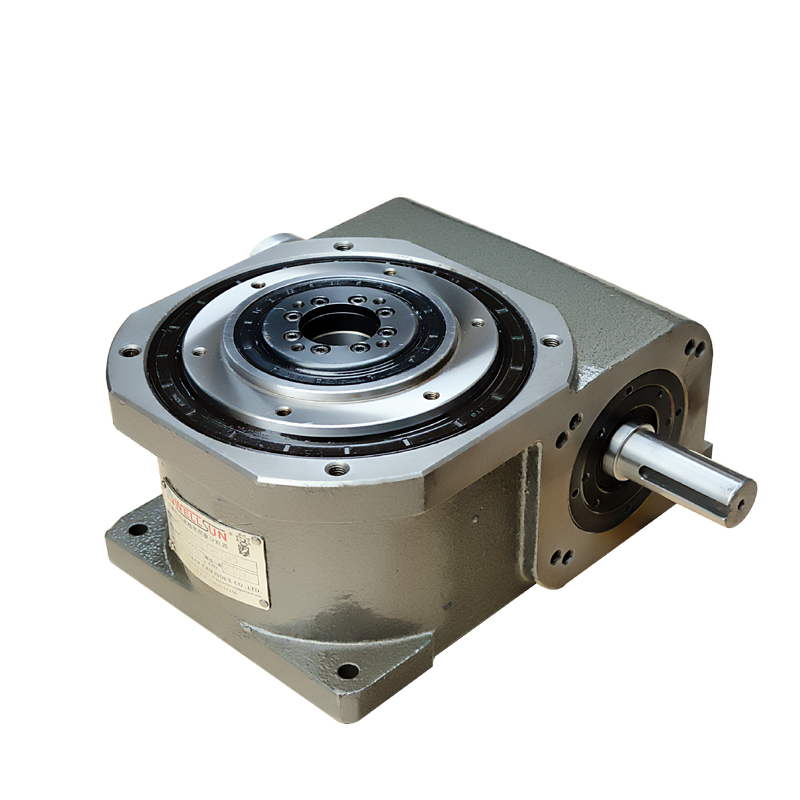
■ Scenario A: High-Frequency Indexing and Spatial Freedom (Choose CD / WCD Series)
● Application Logic: Ideal for workpieces with dense features and varied angles (e.g., non-standard angles like 22.5° or 37°), where cutting loads are relatively uniform.
● Technical Advantage: The Zero-Backlash nature of the Roller Cam ensures rapid dynamic response and superior repeatability during frequent angle switching.
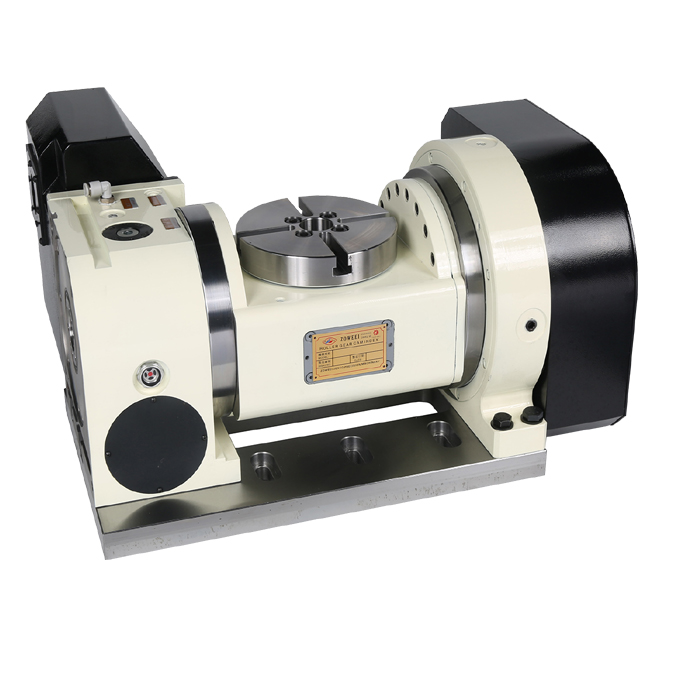
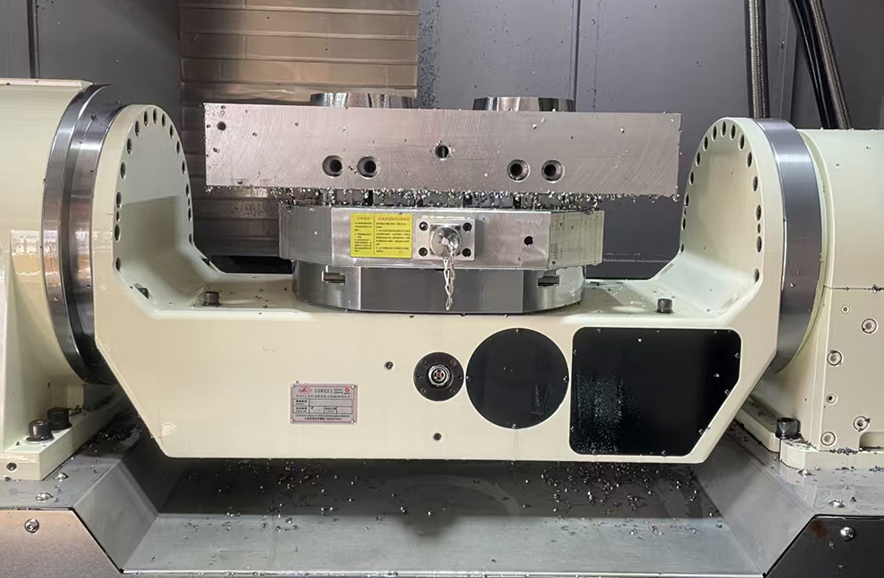
● Typical Combination: Large-stroke Gantry + WCD-500/630 Heavy-Duty 5-Axis Cradle. This combination empowers large machines to handle complex spatial geometries, achieving "One-Setup, Full-Angle Coverage."
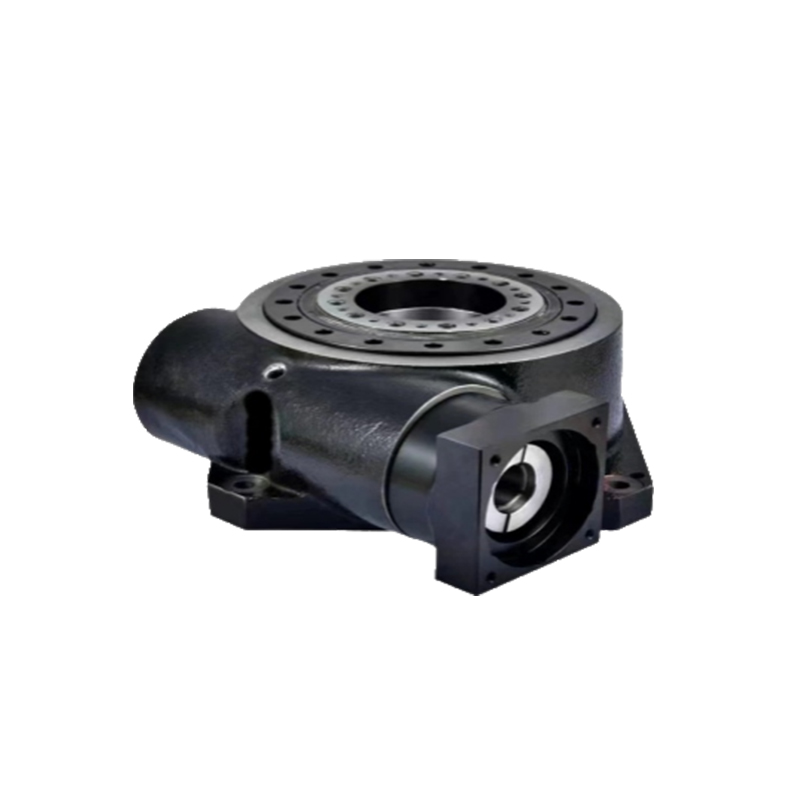
■ Scenario B: Extreme Loads and Heavy-Duty Cutting Rigidity (Choose NCCT / HCT Series)
● Application Logic: Best for hard materials (e.g., alloy steel, high-strength cast iron) and high-volume material removal involving large-diameter face mills or deep-hole drilling.
● Technical Advantage: Relies on the mechanical hard-locking force of the Three-Piece Clutch. During the machining instant, the rotary table and machine bed engage fully through the gear plates, transforming the rotary unit from a "transmission component" into a "rigid platform."
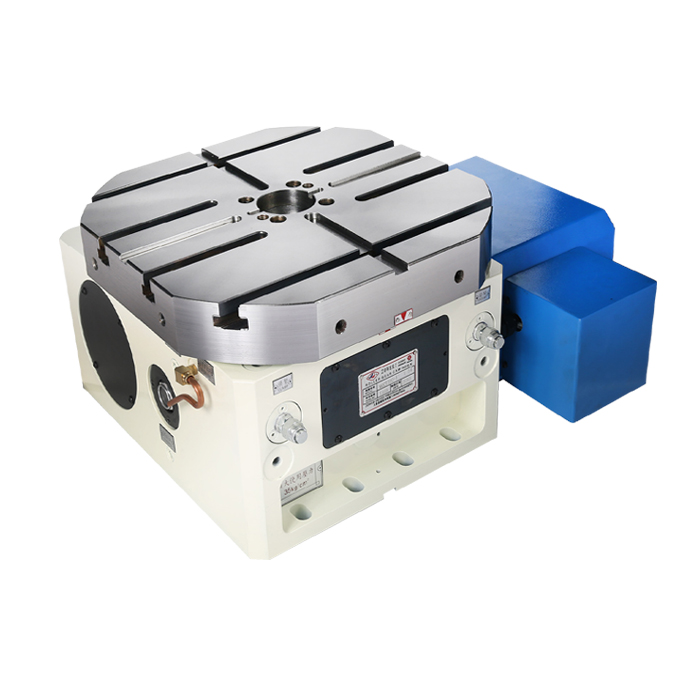
● Typical Combination: Large machine + NCCT-800/1000 Horizontal Indexing Table. This provides a rock-solid machining benchmark for heavy workpieces.
3. Dimension II: Precision Alignment with Workpiece Characteristics
Based on the physical properties of typical industry workpieces, we offer the following standard selection references:
● Precision Equipment & New Energy (High Precision / Lightweight):
Typical Workpieces: Semiconductor vacuum chambers, large optical platform supports, integrated chassis die-castings for EVs.
Recommended Solution: Large-scale CD Series (e.g., CD-500/630).
Selection Rationale: Aluminum machining demands long-term consistency and superior surface finish. The extremely low friction of the Roller Cam effectively suppresses thermal drift, ensuring precise positional tolerances across multiple hole patterns in large frames.
● Energy, Heavy Truck & General Heavy Industry (Heavy Load / High Rigidity):
Typical Workpieces: Wind power gearboxes, heavy-duty truck axle housings, large marine pump bodies, BOPs for oil and gas.
Recommended Solution: NCCT or HCT 800-1000 Series.
Selection Rationale: Machining these parts involves massive impact forces. The locking force of the NCCT can reach tens of thousands of Newtons, effectively absorbing low-frequency vibrations from heavy cutting. This protects the internal transmission while significantly extending tool life.
4. Dimension III: ROI Optimization Strategies for Asset Allocation
■ "Down-Tiering" for Better Value: Don’t Pay for Redundant Features
If your workpiece only requires fixed-angle indexing (e.g., every 1° or 5°), the HCT (Hydraulic Indexing Table) is a smarter choice than an NC 5-axis table. The HCT’s clutch structure provides extreme static rigidity with a simpler control logic and lower failure rate. Its procurement cost is typically only 50%-70% of a same-sized 5-axis unit, leading to a much faster payback period.
■ Protecting Core Assets
Integrating the NCCT Series onto a large gantry is essentially "reducing the burden" on your machine spindle. The powerful locking mechanism prevents cutting forces from feeding back into the servo transmission system. This means your spindle and ball screws experience less alternating stress during heavy-duty operations, thereby extending the overall service life of your expensive gantry machine.
5. Conclusion: Shifting from Hardware Purchasing to Solution Customization
In the integration of large manufacturing units, the selection of the rotary table defines the "ceiling" of the entire production line's performance. Beyond providing high-quality hardware, we offer tailored integration advice based on deep analysis of load torque, interference zones, and machining logic.
"The most suitable solution always lies at the equilibrium point between the limit of rigidity and the flexibility of machining."
Essential Machine Tool Solutions
A Premier Provider of Machine Tool & Automation Components with 20+ Years of Manufacturing Excellence.
Find by Machine Type
Find by Workpiece Type