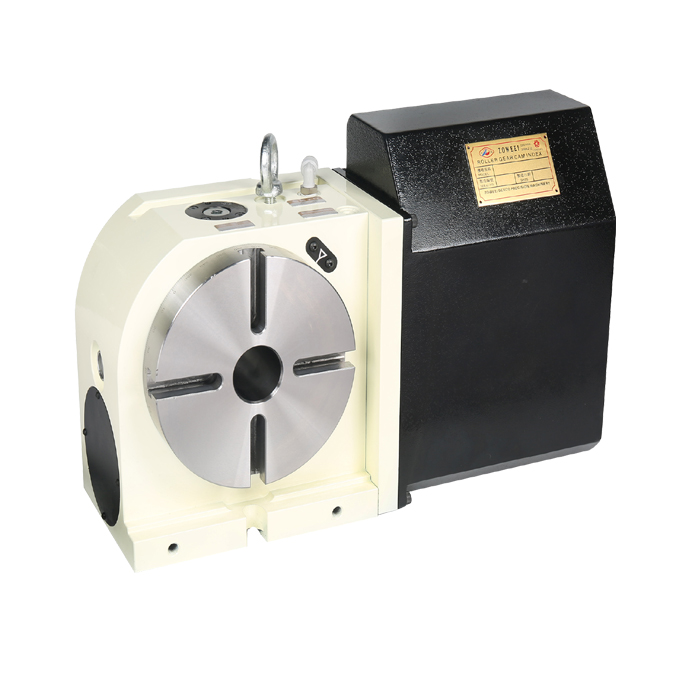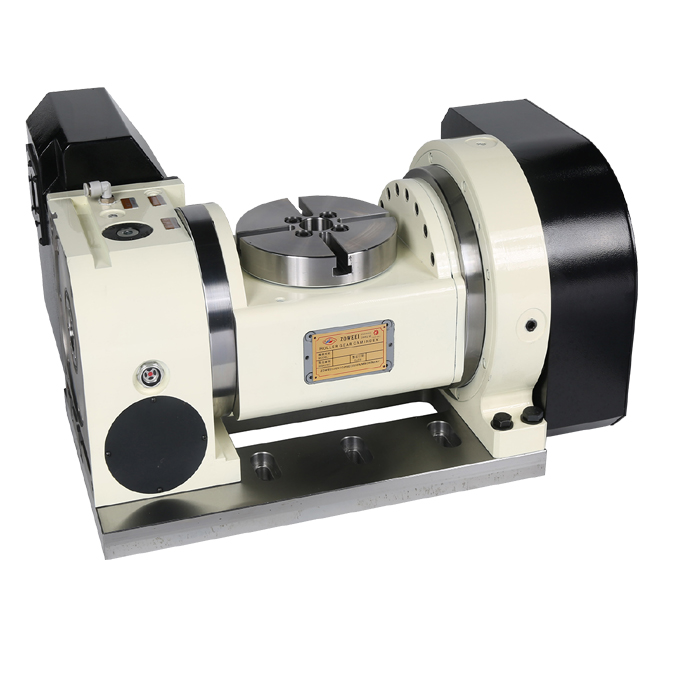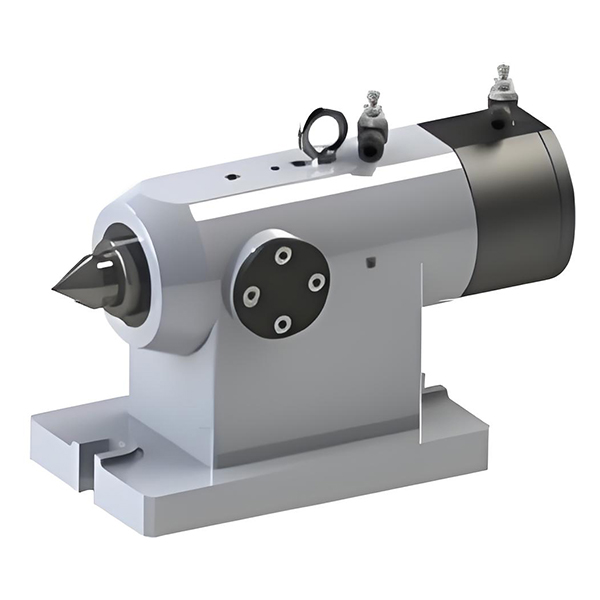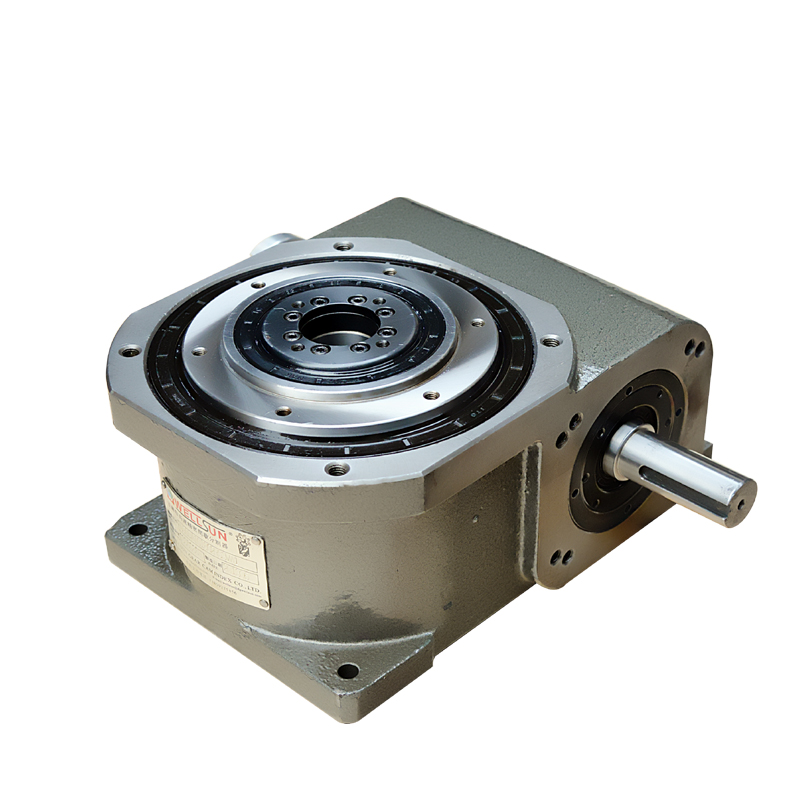


Common Features:
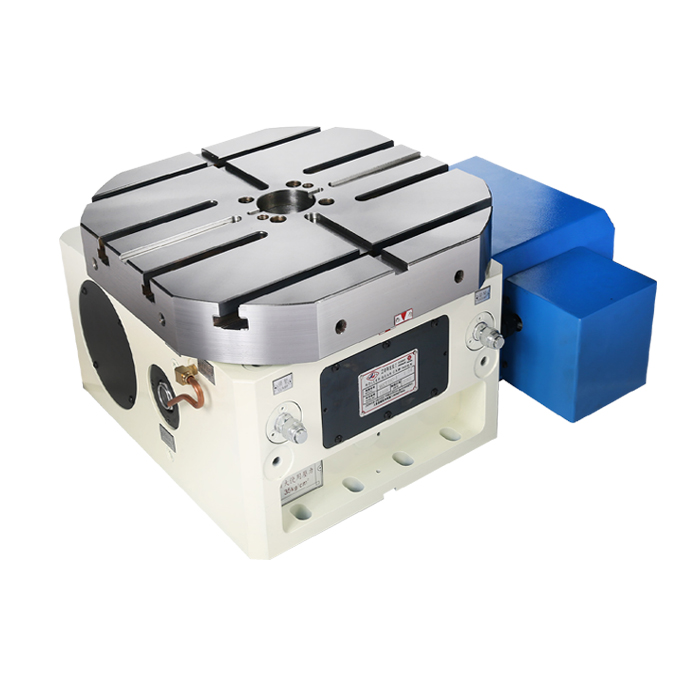
All models use a precision three-piece tooth clutch system with hydraulic clamping. During indexing, the table surface does not lift, maintaining a stable machining reference plane. Indexing accuracy is ±4 arc-seconds, repeatability is ±1 arc-second. Hydraulic clamping provides stable locking torque and strong resistance to cutting vibration. The overall structure is rigid and capable of handling heavy-duty machining tasks.
Share:
NCCT Series – Precision Cam-Driven Hydraulic Indexing Table
Hydraulic indexing tables are used to position workpieces at predetermined angular intervals for machining and automated production. The NCCT, HCT and HCTV series address different indexing requirements, workpiece sizes and machine configurations, helping manufacturers select a suitable rotary indexing solution for their production processes.
From servo-driven cam indexing to heavy-duty hydraulic indexing, selecting the right system requires consideration of indexing angles, table dimensions, workpiece and fixture loads, clamping requirements and machine integration. Explore our complete range of CNC Indexers & Rotary Tables to compare available indexing solutions.
The NCCT series features a servo motor-driven roller gear cam mechanism designed for fast indexing and smooth operation. The cam mechanism offers a long service life, making this series suitable for long-cycle and high-frequency production applications that require consistent indexing performance.
The NCCT series supports standard indexing increments of 15° and 18°. Custom indexing increments of 1° or 5° are also available to accommodate different production requirements, including multi-variety and variable-batch manufacturing.
When selecting an indexing configuration, buyers should consider the number of machining positions, required angular increments, workpiece geometry and production cycle. Confirm the required indexing specification before ordering, particularly when a non-standard configuration is needed.
The NCCT series offers square and round table configurations for different workholding arrangements.
When choosing between square and round tables, evaluate the workpiece footprint, fixture layout, clamping positions and available machine space. The selected configuration should accommodate the complete workholding arrangement and allow sufficient clearance for machining operations.
NCCT indexing tables can be fitted with sub-plates or fixtures to suit different workpiece shapes and machining requirements. Compatible equipment includes:
Fixture design, machine interface dimensions and workpiece clamping requirements should be reviewed together to ensure the indexing table can be integrated into the intended machining setup.
The NCCT series is suitable for machining processes that require fast, smooth and repeatable indexing over extended production cycles. Depending on the selected configuration, applications may include multi-position milling, drilling and tapping, precision workpiece positioning, and dedicated machining operations involving different workpiece geometries.
For manufacturers handling multiple product variants or changing batch requirements, the available indexing options and square or round table configurations provide flexibility when planning workholding and machining sequences.
The HCT and HCTV series are designed for heavy-duty indexing applications where workpiece load, clamping torque and stable positioning are important considerations. Unlike the servo-driven NCCT series, HCT/HCTV indexing is controlled by a hydraulic power unit and solenoid valves.
The HCT/HCTV series supports fixed equal indexing divisions, including configurations with 4, 6, 8, 12 or 24 positions. Arbitrary-angle indexing is not supported by the specified configuration, so the required number of indexing positions should be established before model selection.
This fixed-position indexing approach is suitable for machining processes that follow a defined sequence of angular positions. Buyers should confirm that the available indexing configuration matches the workpiece geometry and the required machining operations.
Compared with the NCCT series, the HCT/HCTV series offers higher load capacity and clamping torque. Its heavy-duty design is intended for demanding machining environments involving heavy workpieces and substantial cutting forces.
When evaluating a heavy-duty hydraulic indexing table, consider the combined weight of the workpiece and fixture, the machining forces, the required clamping stability and the operating conditions. The applicable model specifications should be checked against the actual application before final selection.
The HCTV series supports both horizontal and vertical mounting and can be integrated as a fourth CNC axis. This configuration flexibility makes it suitable for compatible multi-axis machining setups and applications where machine space or workpiece orientation affects equipment layout.
Before integrating an HCTV indexing table into a CNC machine, confirm the mounting interface, available installation space, workpiece clearance and control requirements. These checks help ensure that the indexing table, fixture and machine operate as a coordinated system.
Final suitability depends on the workpiece, machining process, required indexing positions, mounting arrangement and the technical specifications of the selected model.
The NCCT and HCT/HCTV series serve different operating requirements. The most appropriate choice depends on how the workpiece must be indexed, the load and clamping requirements, and the machine configuration.
Consider the NCCT series when the application requires a servo motor-driven roller gear cam mechanism, fast and smooth indexing, or the specified standard and custom indexing increments. Its square and round table options also provide flexibility for different fixture layouts and workpiece shapes.
Consider the HCT/HCTV series when the application requires fixed equal indexing positions, higher load capacity and clamping torque than the NCCT series, or a heavy-duty indexing arrangement. HCTV is particularly relevant when horizontal or vertical mounting or fourth-axis CNC integration is required.
Providing these details at the quotation stage helps establish whether the NCCT or HCT/HCTV series is appropriate and identifies the technical information that needs to be confirmed before ordering.
Selecting an indexing table is part of a broader machining and workholding decision. Table configuration, indexing sequence, fixture design, mounting orientation and machine compatibility should be considered together rather than evaluated as separate components.
For projects involving dedicated machine tools, special-purpose machining equipment or integrated workholding arrangements, explore our CNC Machining Tooling Solutions.
Whether the application involves servo-driven indexing or heavy-duty hydraulic positioning, the selection process should begin with the machining requirements and the workpiece configuration. Confirming these requirements early helps reduce compatibility issues during equipment integration.
No. The specified HCT/HCTV configuration supports fixed equal indexing divisions, including 4, 6, 8, 12 and 24 positions. Arbitrary-angle settings are not supported. Confirm the required number of indexing positions before selecting a model.
The NCCT series offers standard indexing increments of 15° and 18°, with custom increments of 1° or 5° also available. Buyers should confirm the required configuration when requesting a quotation.
Yes. The HCTV series supports both horizontal and vertical mounting and can be integrated as a fourth CNC axis. The mounting interface, available space and machine integration requirements should be confirmed for the intended application.
Start with the required indexing positions, workpiece dimensions, combined workpiece and fixture weight, machining process and installation orientation. Then evaluate the appropriate series and verify the relevant model specifications. Machine drawings, workpiece drawings and fixture details can help clarify compatibility requirements.
Prepare the machine model, workpiece dimensions, total workpiece and fixture weight, required indexing positions, mounting orientation and machining process. If available, include workpiece drawings, fixture drawings and details of the intended production cycle. These details help the technical team evaluate the appropriate indexing table series and confirm the required configuration.

Requirement & Recommended Series
|
Requirement |
Recommended Series |
|
Need flexible indexing angles (1°, 5°, or any angle) |
NCCT (servo motor + cam drive) |
|
Only need fixed equal divisions (e.g., 4, 6, 8, 12, 24) |
HCT / HCTV (hydraulic solenoid control) |
|
Need a square table for complex workpiece clamping |
NCCT Square Table |
|
Need a round table for general rotary machining |
NCCT Round Table |
|
Heavy loads, heavy cutting, harsh conditions |
HCT / HCTV |
|
Need horizontal/vertical mounting or 4th-axis integration |
HCTV |
|
Long-cycle, high-frequency automated production |
NCCT (cam mechanism durability advantage) |
Please let me know if any adjustments are needed.
Essential Machine Tool Solutions
A Premier Provider of Machine Tool & Automation Components with 20+ Years of Manufacturing Excellence.
Find by Machine Type
Find by Workpiece Type